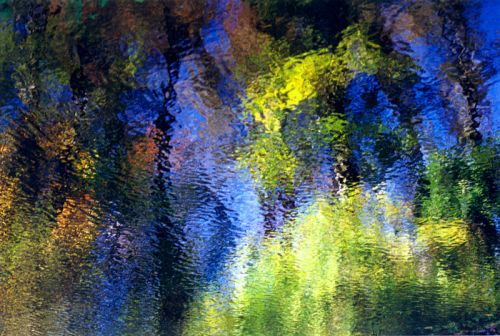
It's a neurological "condition" (minus the negative connotations), affecting about 4% of the population, in which cognitive and sensory pathways "cross over" one another, leading to an unusual "blending" of perceptions.
Sight gets mixed in with hearing, hearing with taste and so on... One might experience blue as not just a color, but also as a taste; or the sound of a cello as inherently "green", not simply as a metaphor, but because the visual experience of "green" accompanies the auditory experience of the sound in a very real and literal way.
It's fascinating stuff and truly makes one wonder about the possible differences among people's perception of the world.
So if this has sparked your interest, here are two interesting articles on synesthesia:
In this interview, neuroscientist David Eagleman talks about the synesthesia gene and the The Synesthesia Battery, a free online test for synesthesia aimed at promoting scientific progress in the field.
Even more fascinating: consider synesthesia from the perspective of art. Artist and synesthete Marcia Smilack creates photographs and videos to recreate some of her visual-auditory sensations for non-synesthetes. You can read about her in this Seed Magazine article, The Most Beautiful Painting You've Ever Heard.
Also, check out Smilack's portfolio here.